When you choose a system for a tire shop, the same question comes up early: is a general workshop system enough, or do you need one built for the tire trade specifically? Both are sold to workshops, and both can produce an invoice. The difference lies elsewhere, and it is worth understanding before you commit to anything for several years.

What the difference really is
A general workshop system is built to fit many kinds of workshop at once — car, mechanical, agricultural, tires and everything in between. Its strength is breadth. An industry solution is built for one trade, does fewer things, but does them the way the trade actually works. For a tire shop the difference is that wheel sets, tire hotel, season and rim data are words the system already knows, not something you have to force into fields meant for something else.
The general system covers the general
It is easy to dismiss a broad system, but it does a lot right. A customer register, invoicing, time tracking and simple stock exist in most of them, and for a workshop where tires are only a small part of the work, that can be more than enough. If you run broadly, breadth may be worth more than depth. The point is not that one is bad and the other good, but that they are built for two different working days.
What a tire shop needs that others do not notice
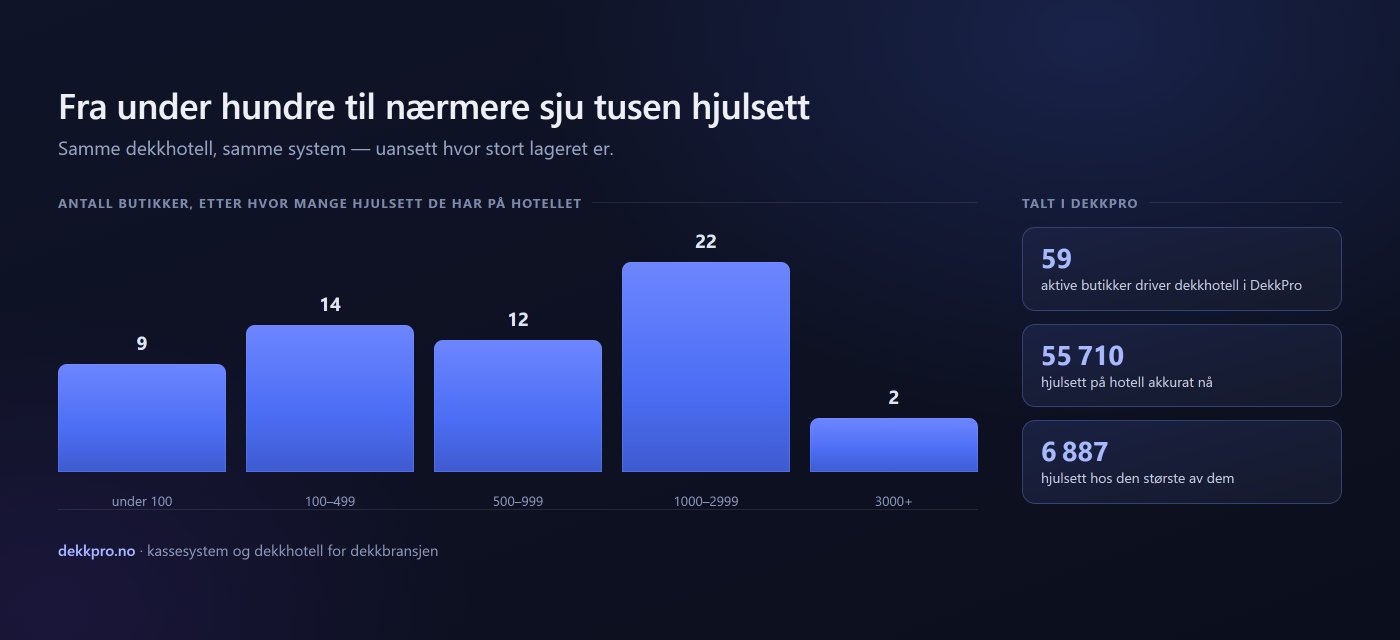
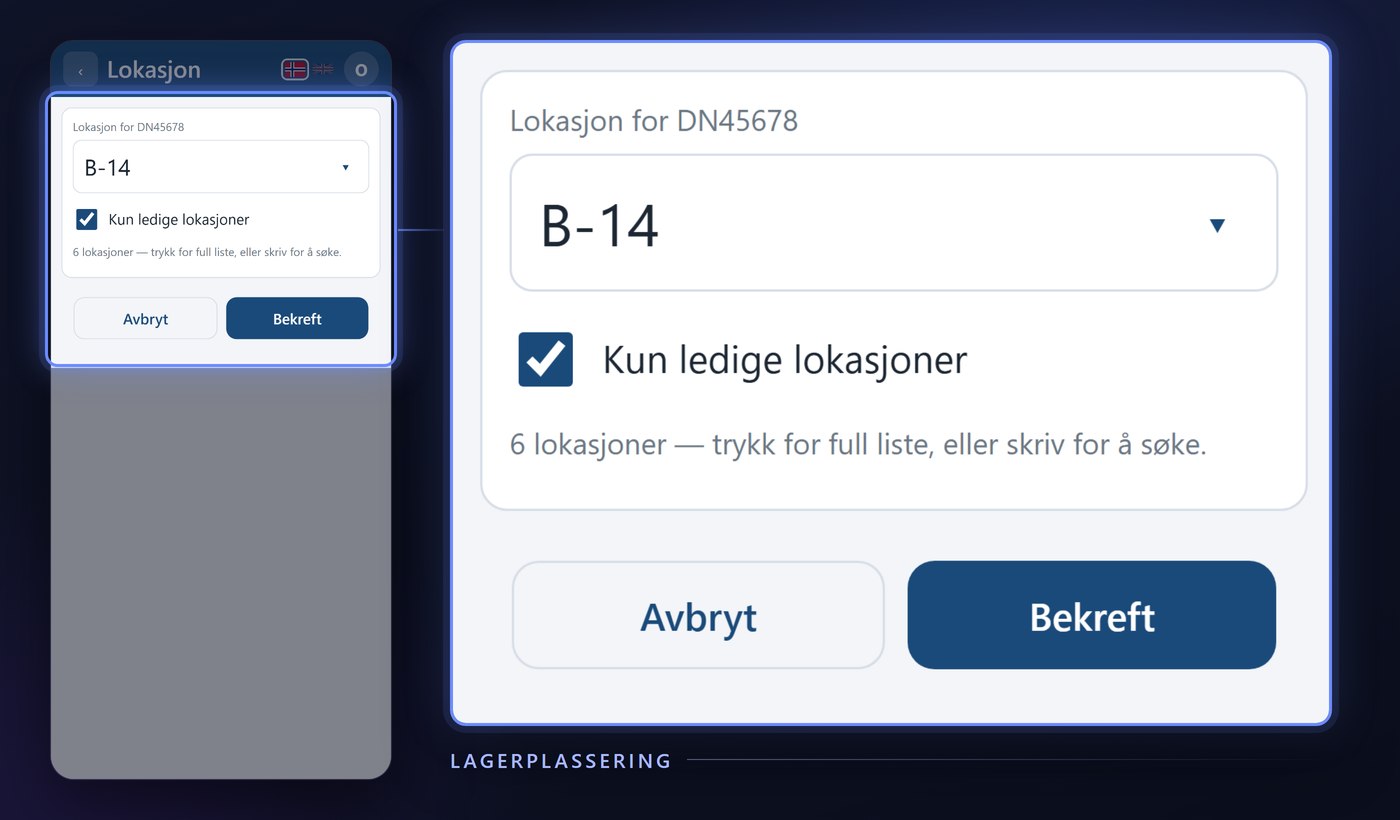
As soon as a tire hotel enters the picture, the arithmetic changes. A wheel set has to go onto a location, stay there a season, be called in at the right time, and be found again in seconds when the customer is at the counter. That is thousands of sets to keep track of at once, not one job at a time. The season comes in two peaks a year, with queues and a phone that keeps ringing. And if you sell rims, the measurements have to line up before the customer pays. This is the working day an industry solution is drawn around — and the part a general system rarely has a ready answer for.
The questions that decide it
If you are evaluating a system, ask both candidates the same questions — and ask to see it done, not just described:
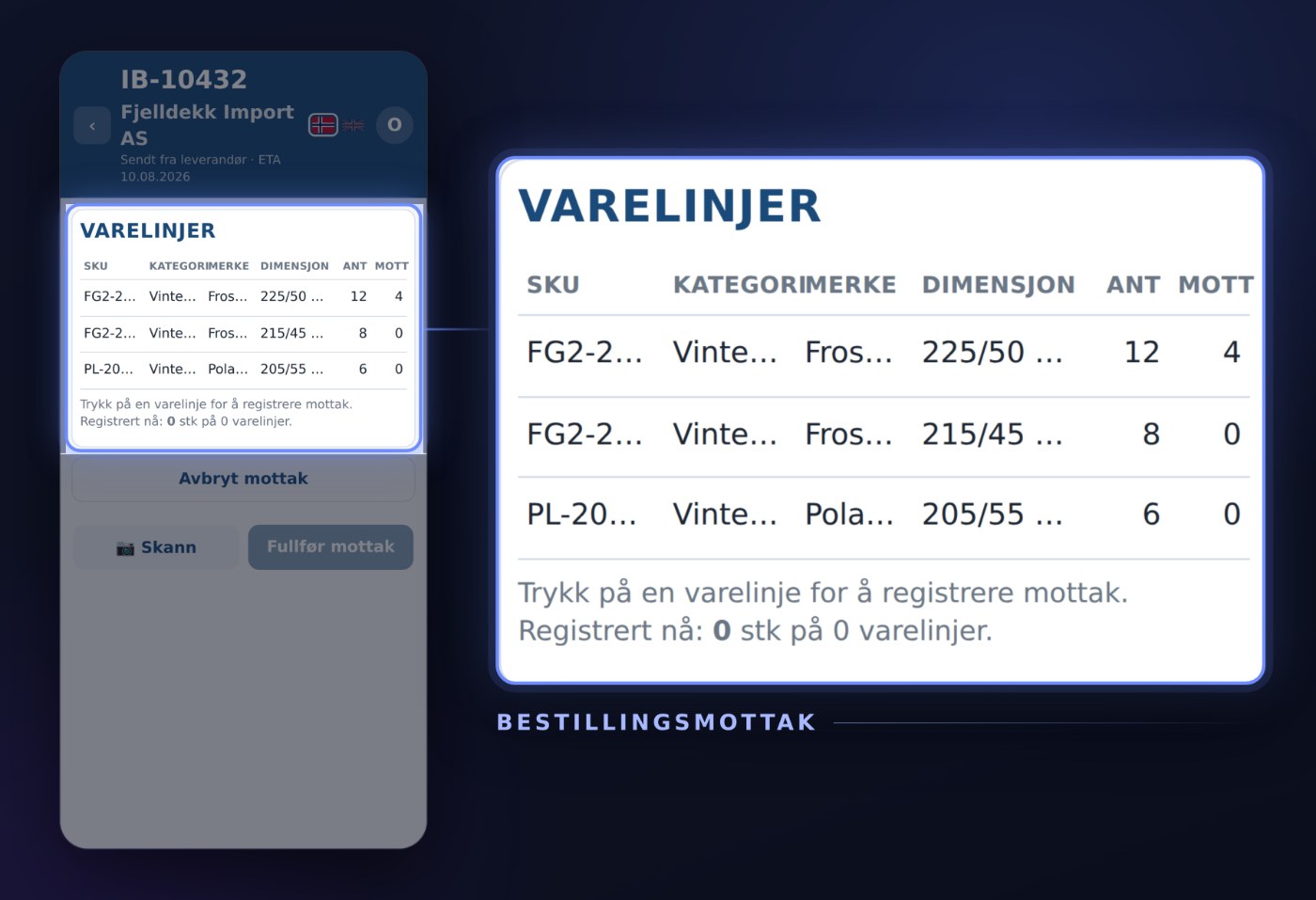
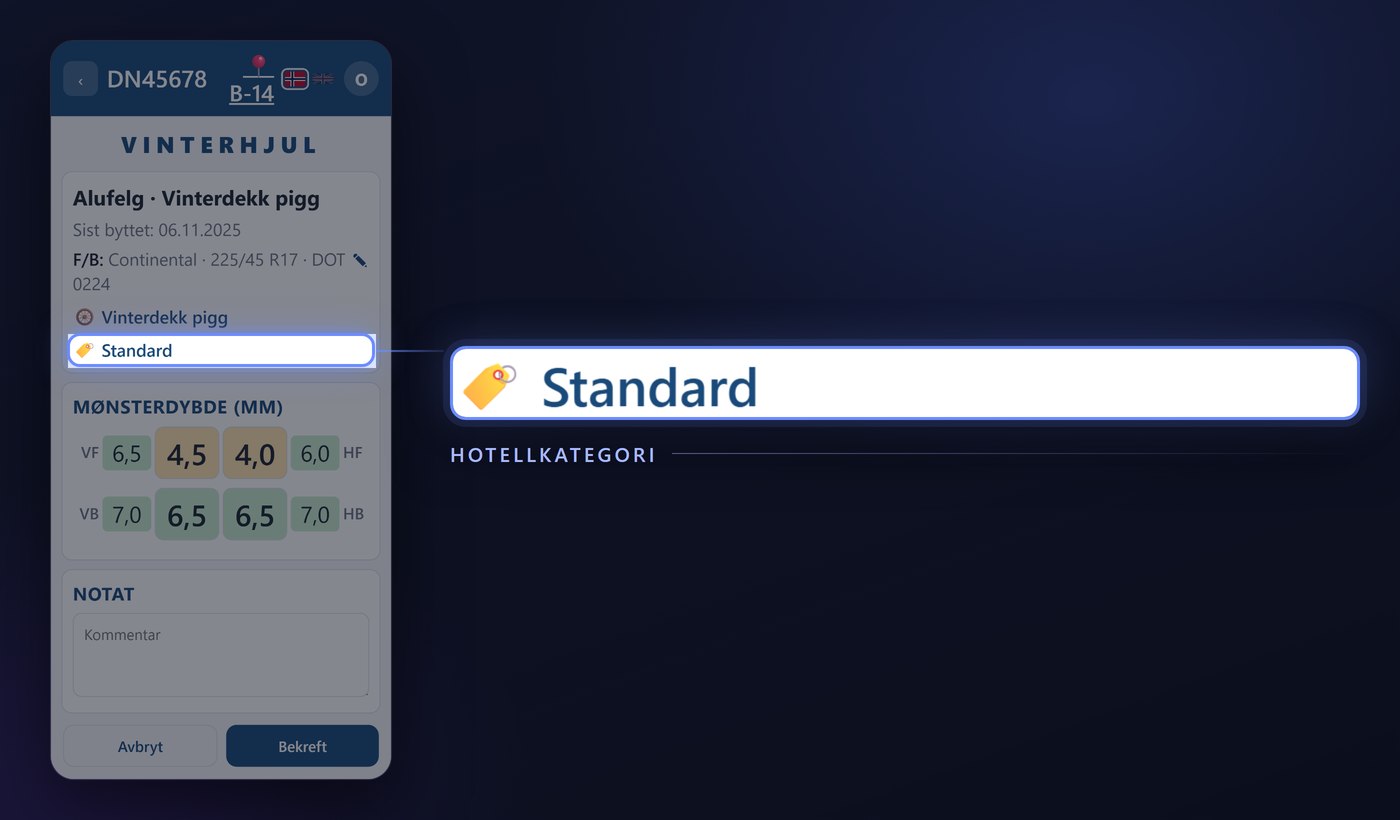
- Can it keep track of a whole tire hotel, with location, season and call-ins, not just ordinary stock?
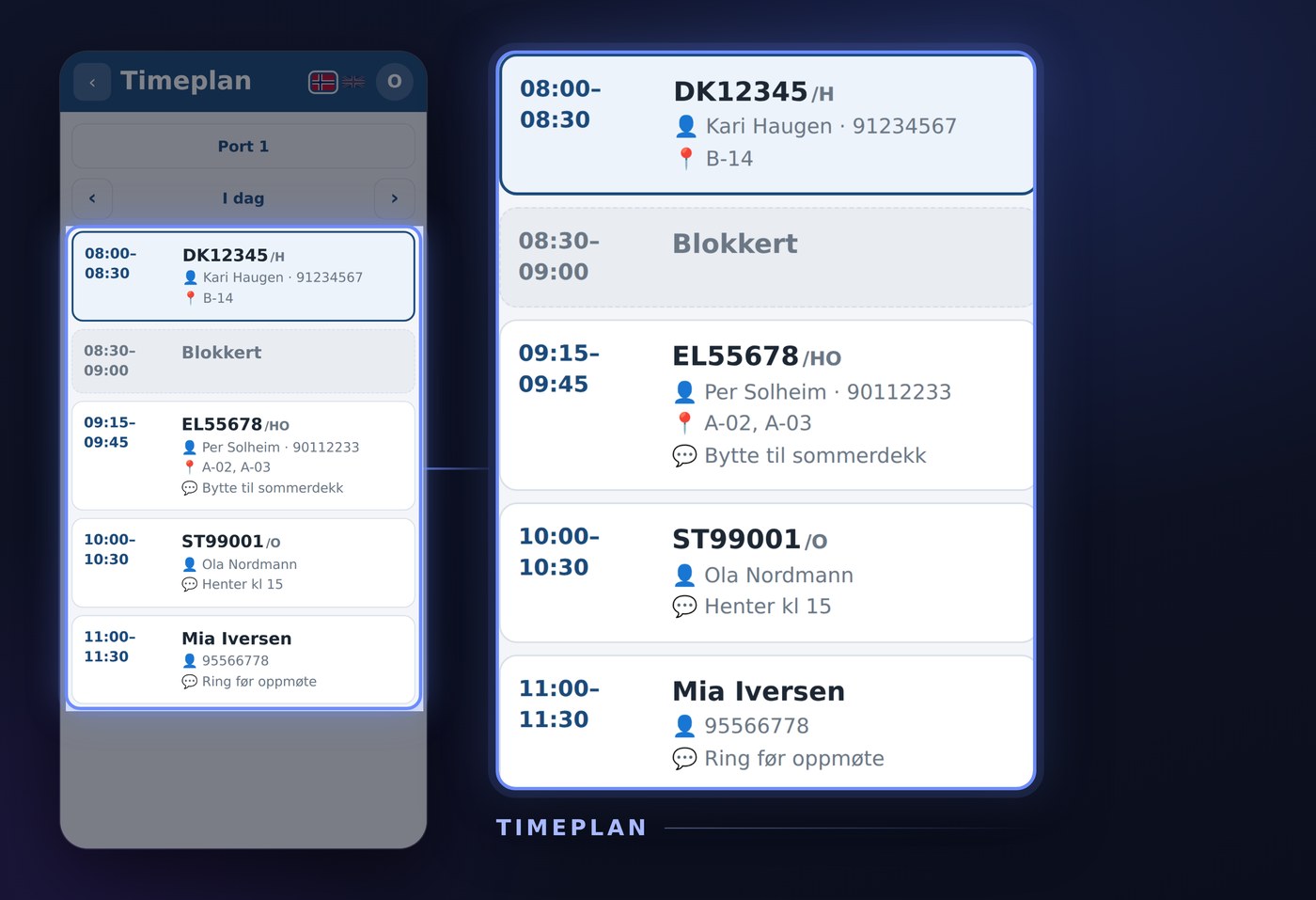
- Can customers be called in and book a time themselves, so the work moves from the phone into the system?
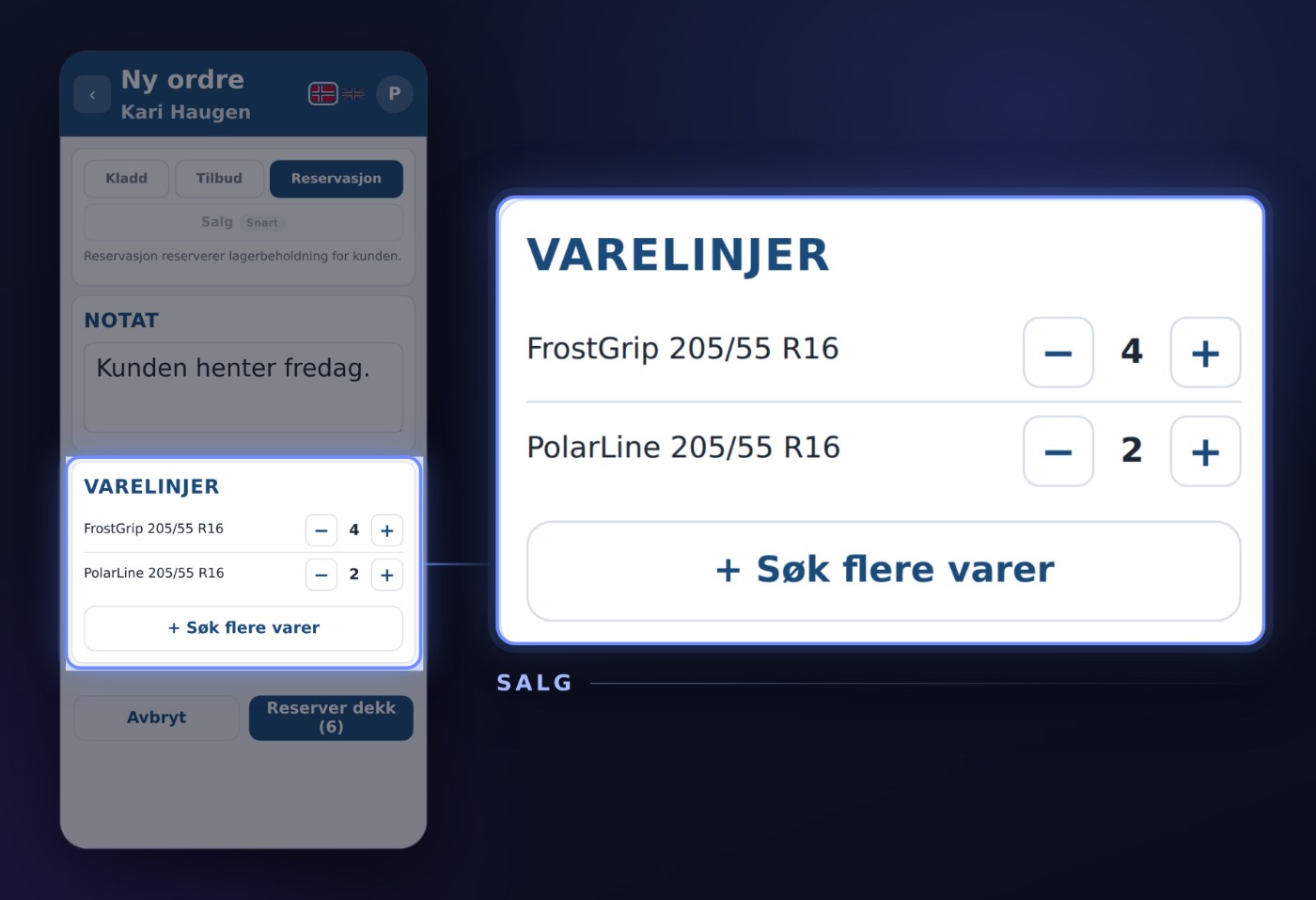
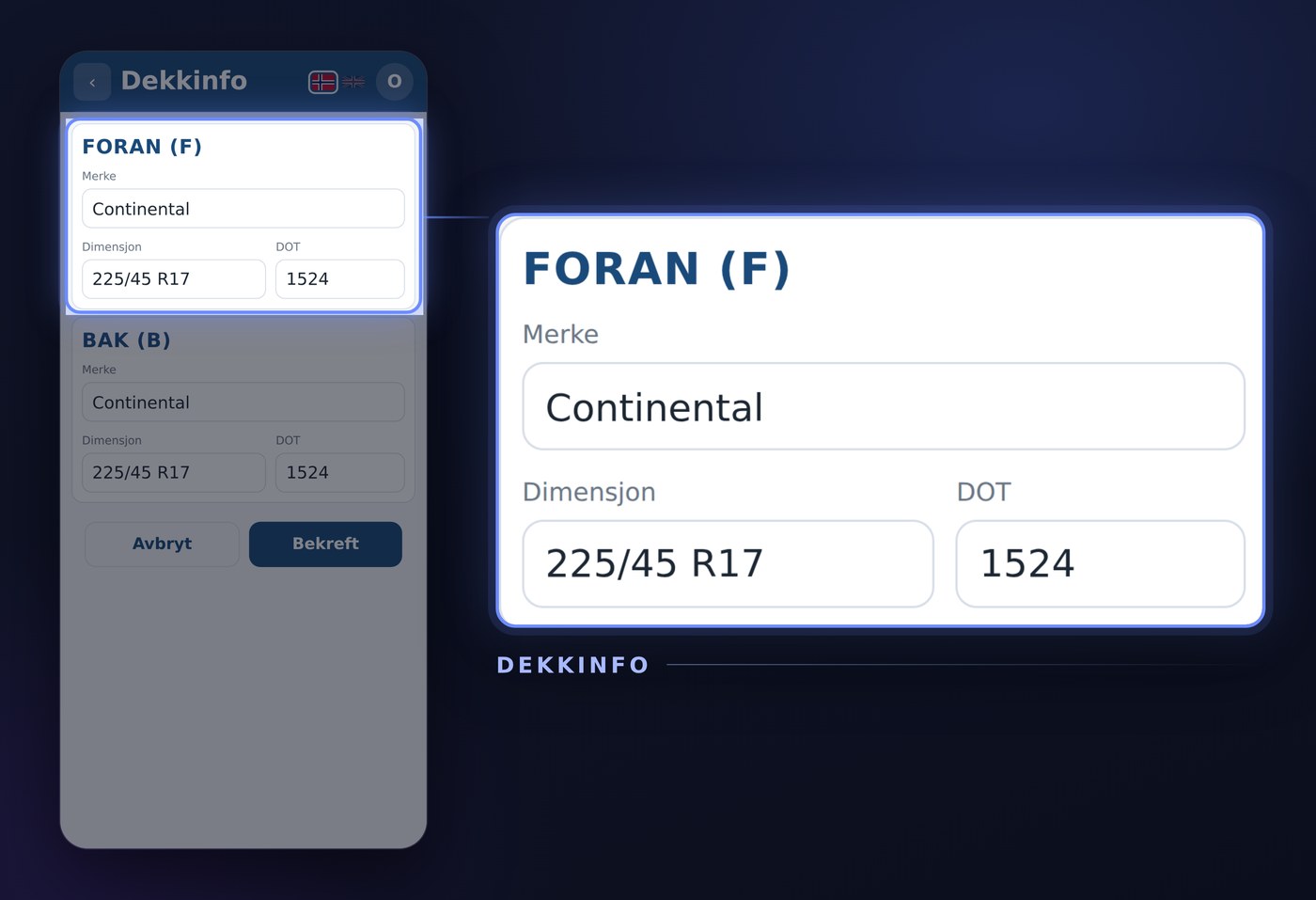
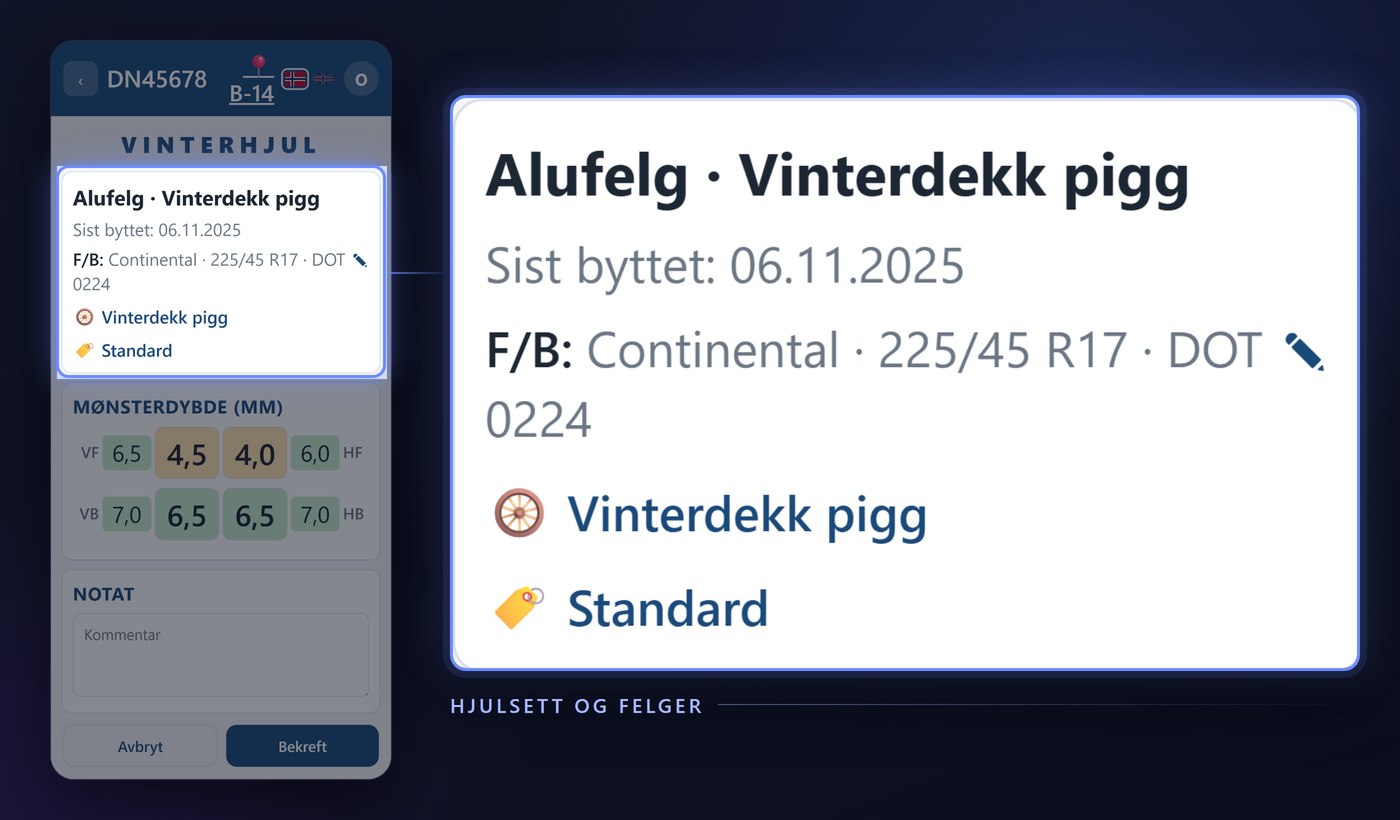
- Does it know rims and tires as their own items, with the measurements that have to match for a wheel to fit the car?
- Does the sale go straight on to the accounts, without anyone entering the same thing twice?
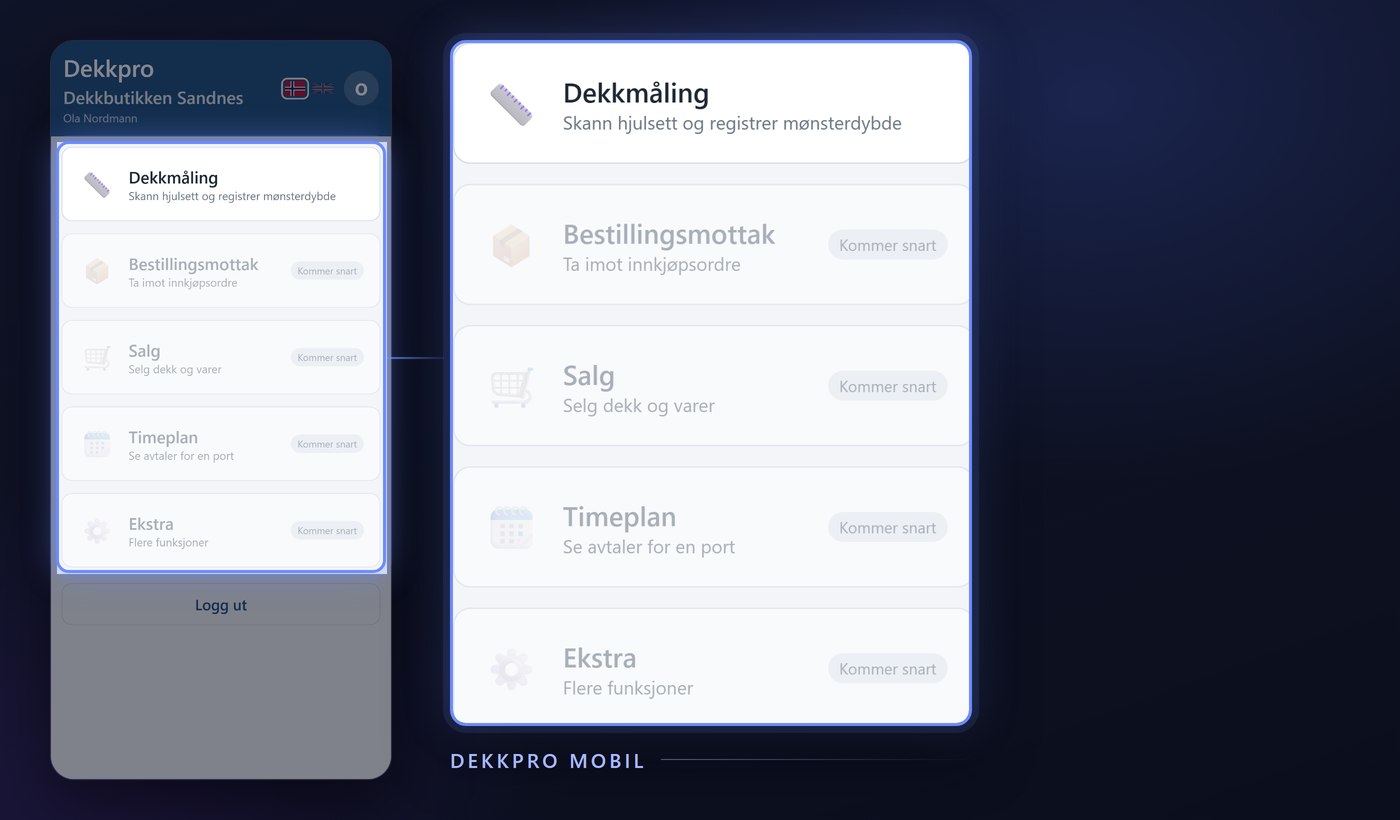
- Is it available on mobile, so the job can be done at the rack and not only at a PC by the counter?
- Is it built for the Norwegian tire trade, or are tires just one of many trades it has to fit?
Ask someone who runs a shop like yours
The best source is a shop your size that uses the system today. A demo always looks good; what counts is how the system behaves on the busiest day in October. Ask concretely: how long does a check-in take, what happens when two customers want the same slot, how fast do they find a wheel set again, and what did the supplier say when something had to be fixed in the middle of the season. The experience of someone who has stood in it is worth more than a feature list.
So what should you choose?
The answer depends on what you actually do. If tires are a small part of a broad workshop, a general system may be the right choice. If tires and the tire hotel are the business itself, you lose time every single season on a system that was not built for it. DekkPro is the industry solution — built for tire shops, and nothing else. To see the difference for yourself, see what the system covers, or get in touch for a demo.