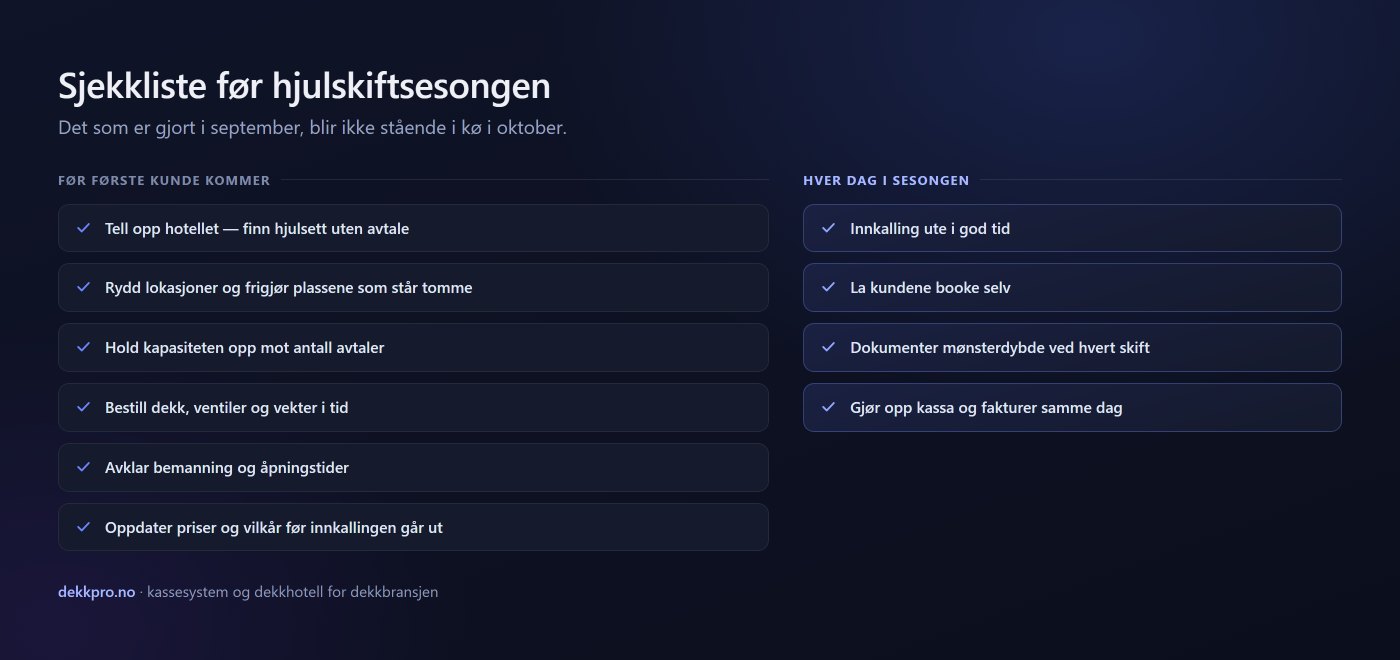
Tire change season is the time of year when a tire shop earns the most and loses track the most. The difference between the two is almost always decided in September. Here is the checklist we would work through now — written for the shop owner, and useful whatever system you run.
1. Count the hotel before you call anyone in
Start by knowing what is actually on the racks. A physical count against your lists turns up three things every time: wheel sets sitting there with no valid agreement, wheel sets collected but never checked out, and locations recorded as full that are empty. All three cost you space you will need in four weeks.
Deal with anything that has sat for two seasons without the customer responding at the same time. Now is when you have time to call them — not in the middle of October.
2. Do the capacity arithmetic, not the gut feeling
The maths is simple and most people are surprised by it. If you hold 1,200 wheel sets and count on six effective weeks, that is 200 changes per week. Across five days it is 40 wheel changes a day, every day, for six weeks.
So ask yourself: can your staff handle 40 changes in a day, on top of reception and the phone? Can you do it on the days two people are ill? If the answer is no, there are only three dials to turn — more hours, more hands, or a longer season. All three have to be decided in September.
3. Order parts and consumables now
What stops a busy day is rarely tires. It is valves, balancing weights, TPMS sensors, wheel bolts and labels. Go through last season's consumption and order against that, not against what is on the shelf today.
Check that your supplier prices are up to date in the system while you are at it. Sell all season on last year's cost price and the margin is gone before you notice.
4. Staffing: the season is short and hard
Seasonal staff need to be confirmed, not planned. If you have decided to bring in two extra people in October, September is the month you find them, agree the hours and train them. A seasonal worker who gets their training on the busiest day of the year is a cost, not a help.
Set out a simple plan for who does what when five cars are queuing: one person takes reception and the system, the rest change wheels. Shops that do not split the roles in season end up with everyone doing a bit of everything and nothing getting finished.
5. Update prices and terms before the call-ins go out
The price you send out in the call-in is the price you live with all season. If storage or fitting prices are going up, decide before the first message goes out. Go through the terms at the same time: what happens if the customer does not turn up, how long do you store a set nobody collects, and what does ending the agreement cost. These are the questions you will get in October, and they are far easier to answer when the answer was written down in September.
6. Call-ins: early, and in two rounds
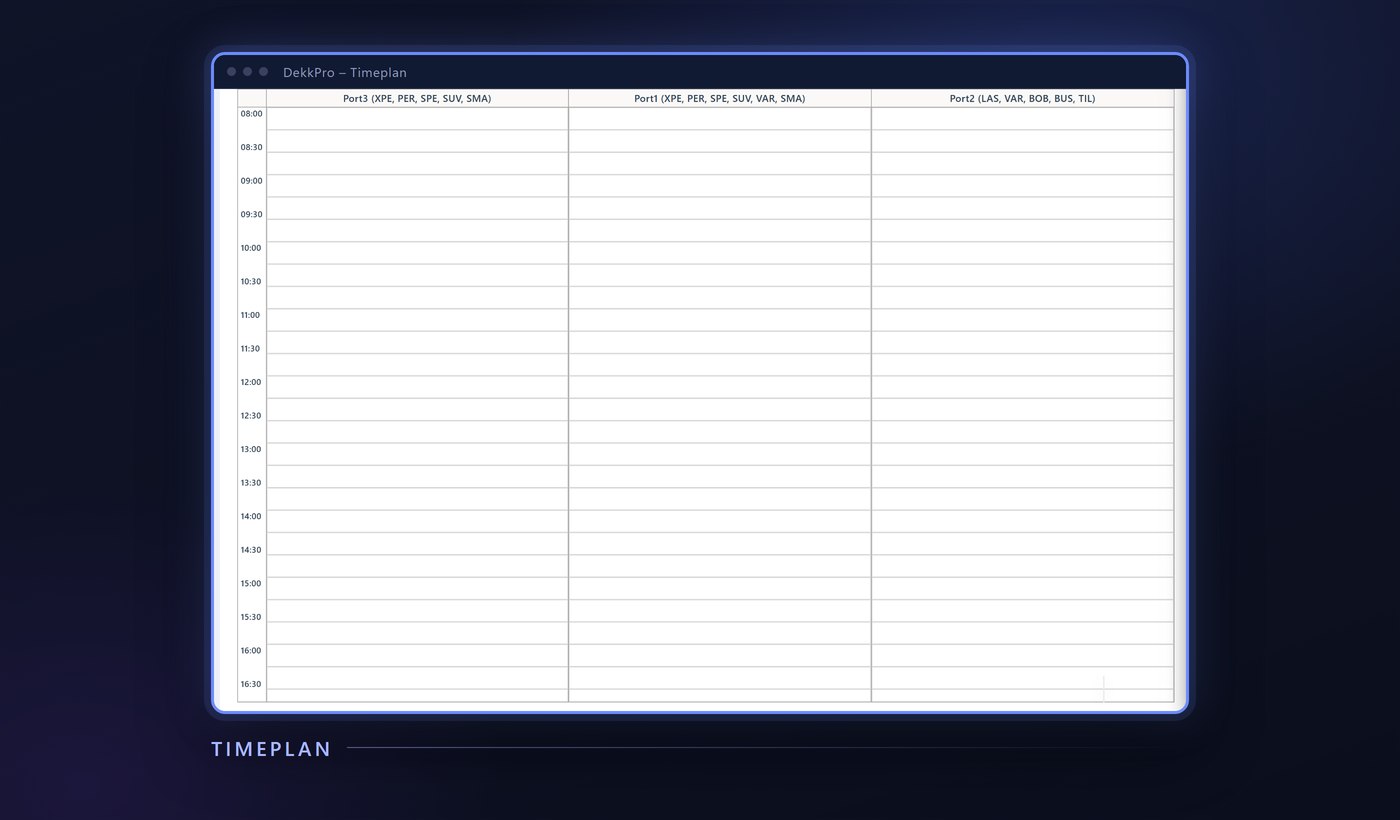
Send the first call-in well before you expect the rush, and let customers pick their own slot. That moves the work from the phone into the system, and it levels out the days — customers spread themselves wider than a receptionist can manage by hand.
Plan for a second round. Roughly a third will not answer the first message, and they turn up as walk-ins on the worst possible day if you never chased them. A second round to everyone who has not booked is the cheapest queue levelling there is.
7. What has to happen every single day
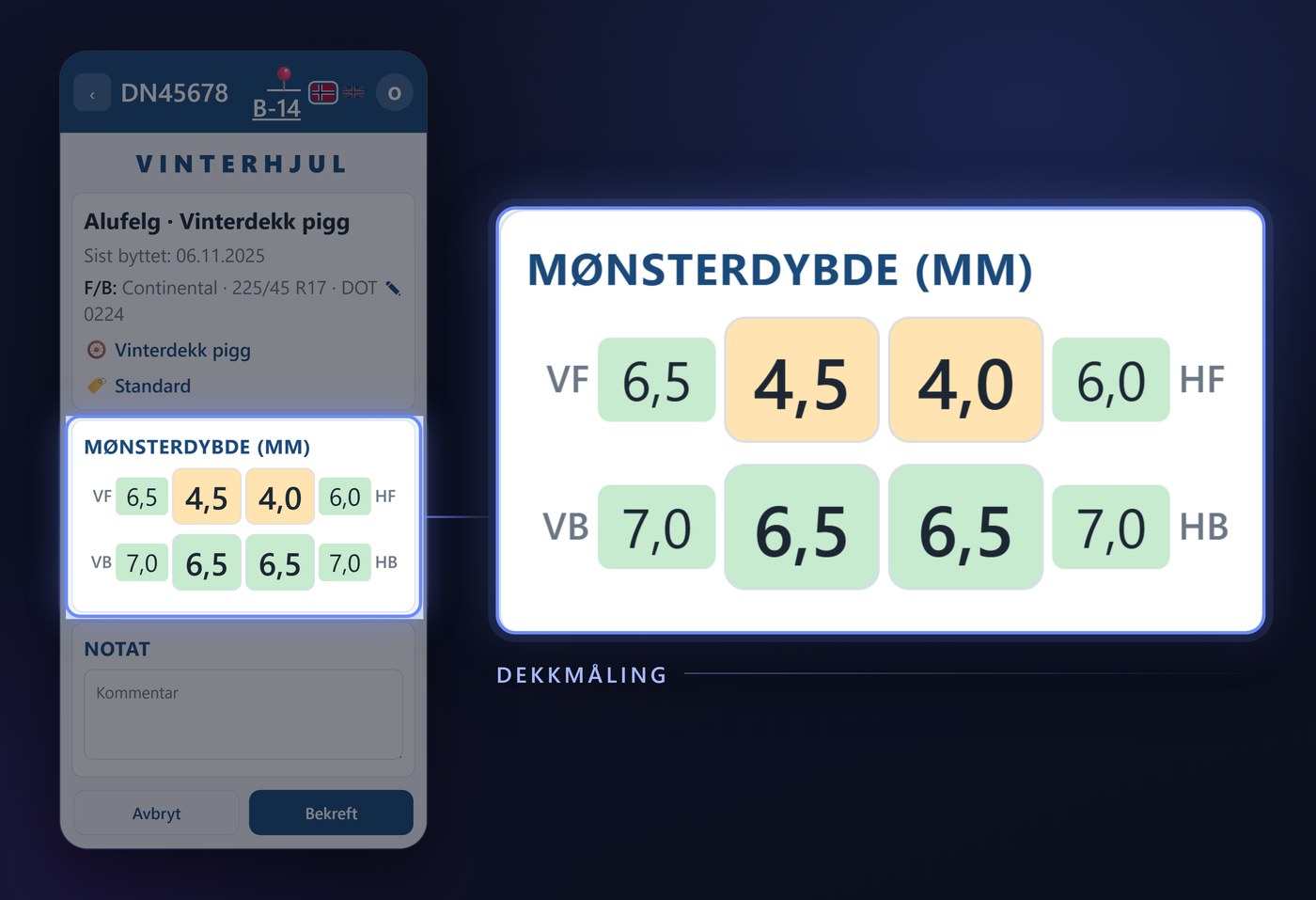
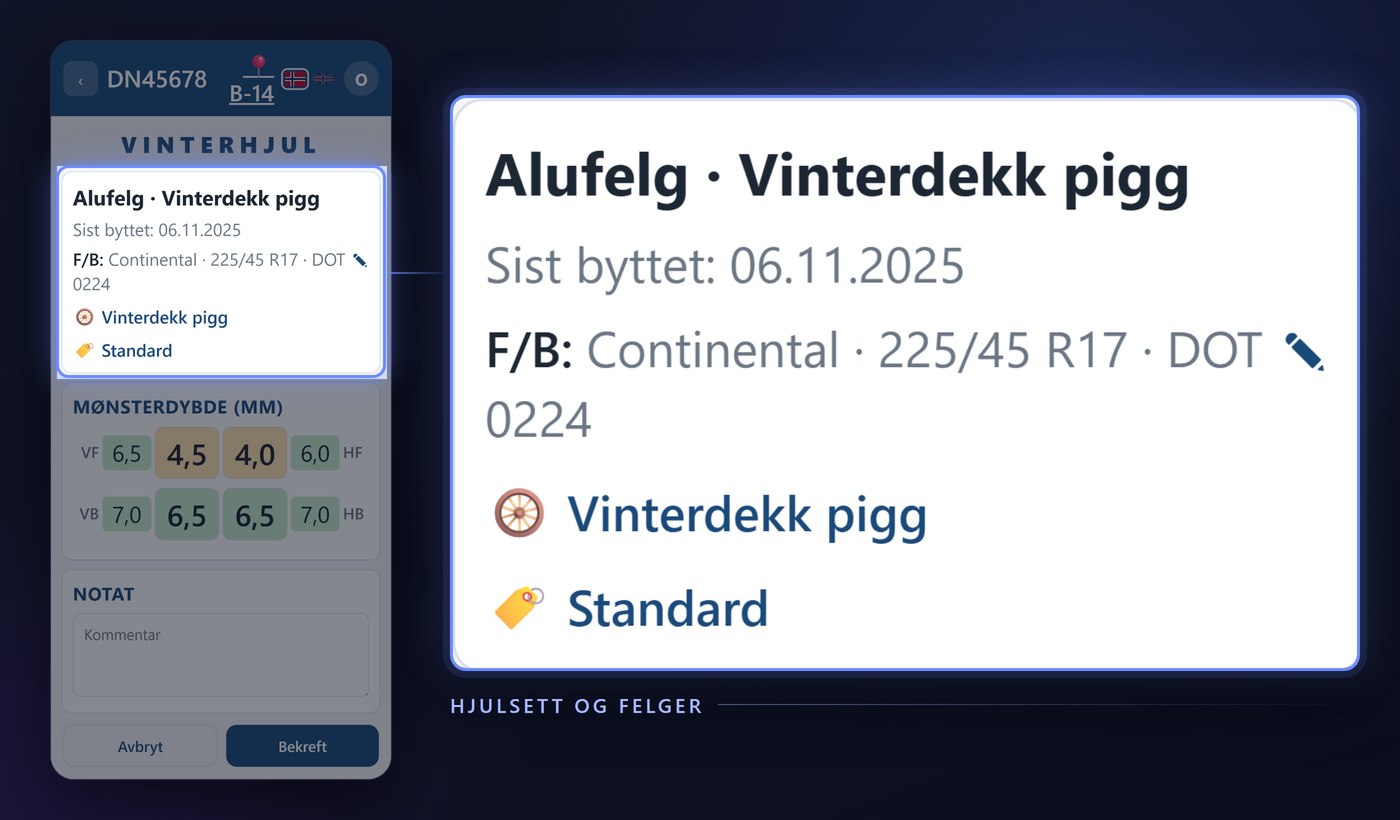
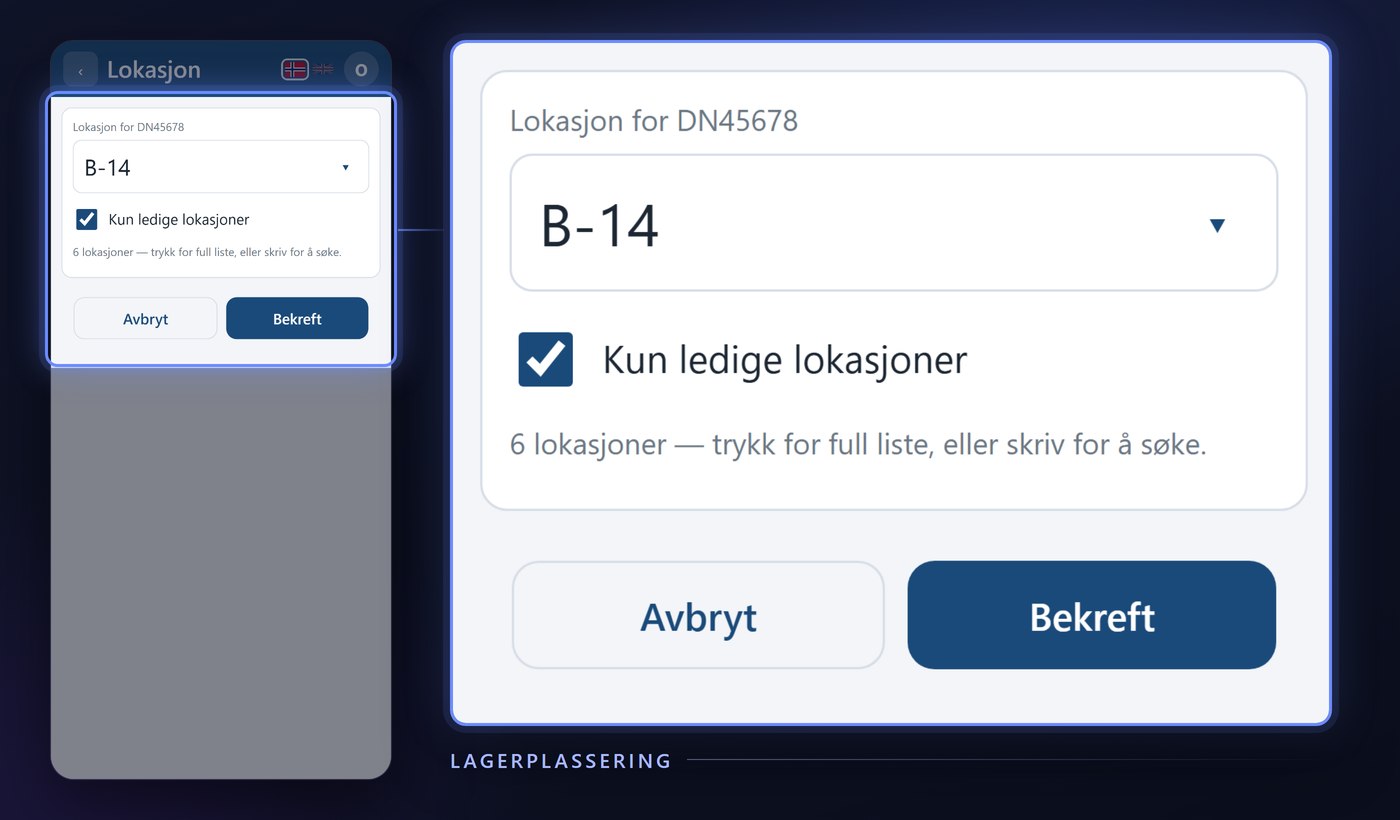
Four things should be done before you lock up: the sets that came in are recorded in the right location, tread depth is documented, the day's jobs are invoiced, and the till is closed off. Put the recording off until tomorrow during season and by the weekend you have a warehouse you cannot find anything in — plus an invoicing job in November that nobody remembers the details of.
It is also the simplest protection you have against an unhappy customer next spring: a documented tread depth at drop-off settles the discussion before it starts.
Let the system take the boring part
The points above are the shop's job. What can be automated away — call-ins, booking, storage locations, invoicing and the reports afterwards — should be. See how the tire hotel works in DekkPro, or pricing and packages.
Good luck with the season.